
Cycloid today at the KubeCon + CloudNativeCon Europe conference revealed it has added an ability to create and manage multiple versions of reusable stacks of software that platform engineering teams make available via the company’s internal developer platform (IDP).
Additionally, Cycloid has added an Adoption Dashboard that makes it simpler to visualize which software components are running within a version of a specific stack.
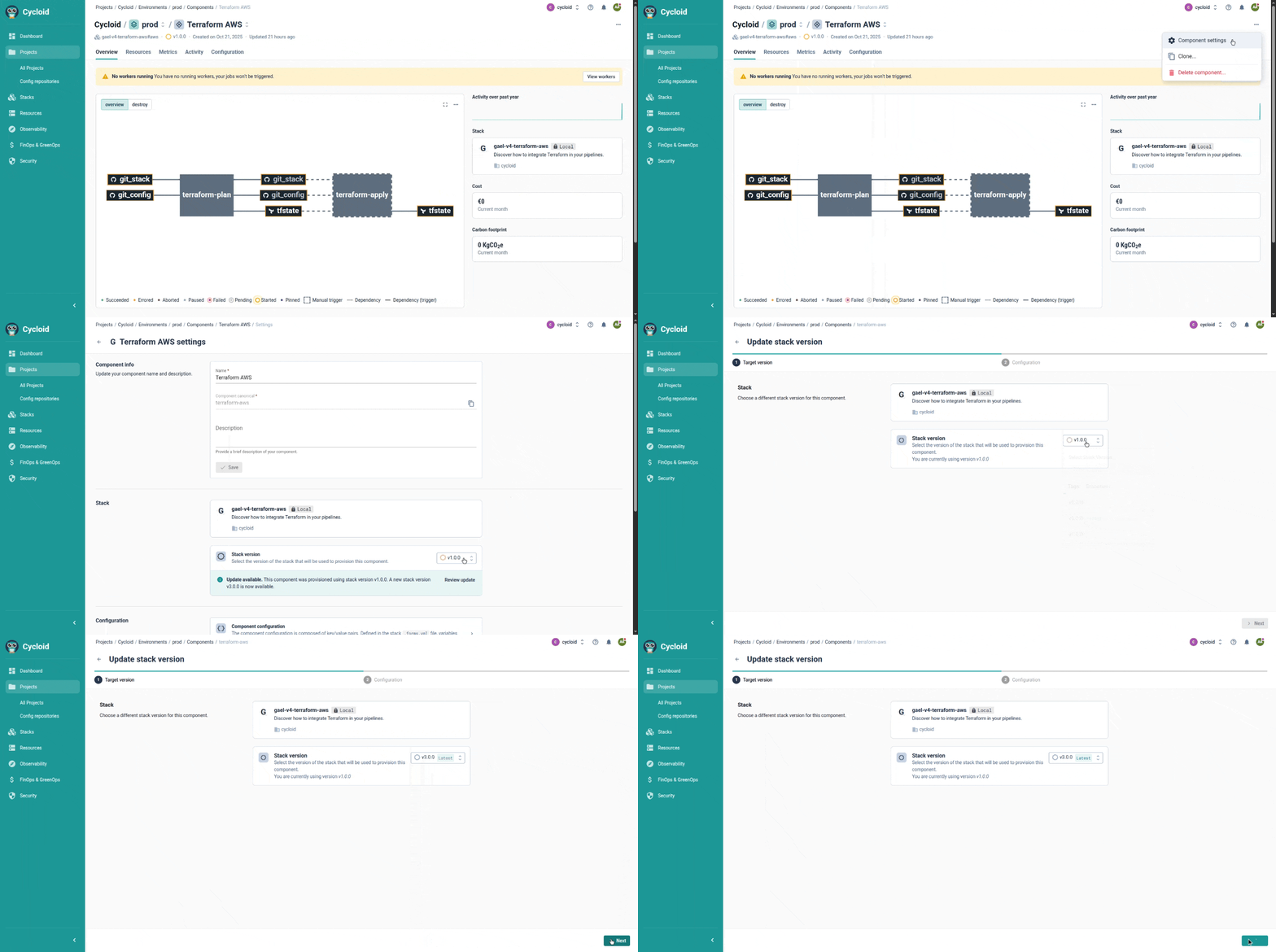
Olivier de Turckheim, a solutions architect for Cycloid, said the Stack Versioning capability added to the service catalog embedded in the company’s namesake IDP gives platform engineering teams more granular control over how stacks of software are provisioned using Terraform infrastructure-as-code (IaC) tools.
The overall goal is to provide platform engineering teams with more flexibility as they strive to centrally manage multiple versions of different stacks of software that the IDP enables application developers to download as needed, noted de Turckheim. Those teams will also be able to more easily create sandbox IT environments based on an existing stack that includes, for example, a testing module, he added.
Stack Versioning also makes it possible to stage rollouts because each new version of a stack can be introduced in staging, tested under real conditions, and then promoted into a production once fully vetted.
Otherwise, platform engineering teams will need to manually track which configurations have been created for each team, said de Turckheim.
Additionally, Stack Versioning lays the foundation for adding artificial intelligence (AI) agents that will be added to enable platform engineering teams to more adroitly complete tasks, he noted. Eventually, via a chat interface it will become possible for an application developer to describe their use case, which will then be used to surface the most appropriate stacks of supported infrastructure software needed to build and run an application, added de Turckheim.
It’s not clear at what pace organizations are adopting platform engineering to centralize the management of DevOps workflows, but as the pace of application development accelerates in the age of AI there is an obvious emerging need to revisit software engineering workflows. Requiring each application development team to stand up and maintain their own DevOps platform is becoming unsustainable.
However, in order to get application developers to buy into centralizing the management of DevOps a platform engineering team needs to demonstrate flexibility. Arguably, the reason many application development teams embraced DevOps in the first place was to escape the shackles of centralized IT teams that didn’t allow them to easily experiment with new tools, platforms and services. Platform engineering teams need to be able to manage multiple IT environments versus requiring every application development team to standardize on one specific stack of infrastructure software.
There will, eventually, come a day when DevOp engineers and IT administrators are able to collaborate more easily than have in the past. In the meantime, the IDP has emerged as the focal point for building platform engineering teams that are squarely focused on treating application developers as a customer rather than as a hostage.